How To Talk To Your Teenage Daughter: 7 Tips from a Therapist
If it feels difficult to talk to your teenage daughter, you're not alone. In this article, we'll explore how you talk to your teenage daughter. It starts with how you listen to her, so she feels safe talking to you.
As a mother daughter therapist and coach, I have helped many mothers keep their daughters talking or reconnect after pulling away. Teenagers want to talk to their parents, but they want to feel safe doing it.
Talking to your daughter about topics such as their feelings, their weight, and their mistakes can be difficult, but they’re important. This article will teach you the importance of being safe, curious, and calm. The environment you create will decide how well you and your teen daughter will talk. She is looking to you to create safety for her to stay close and connected to you.
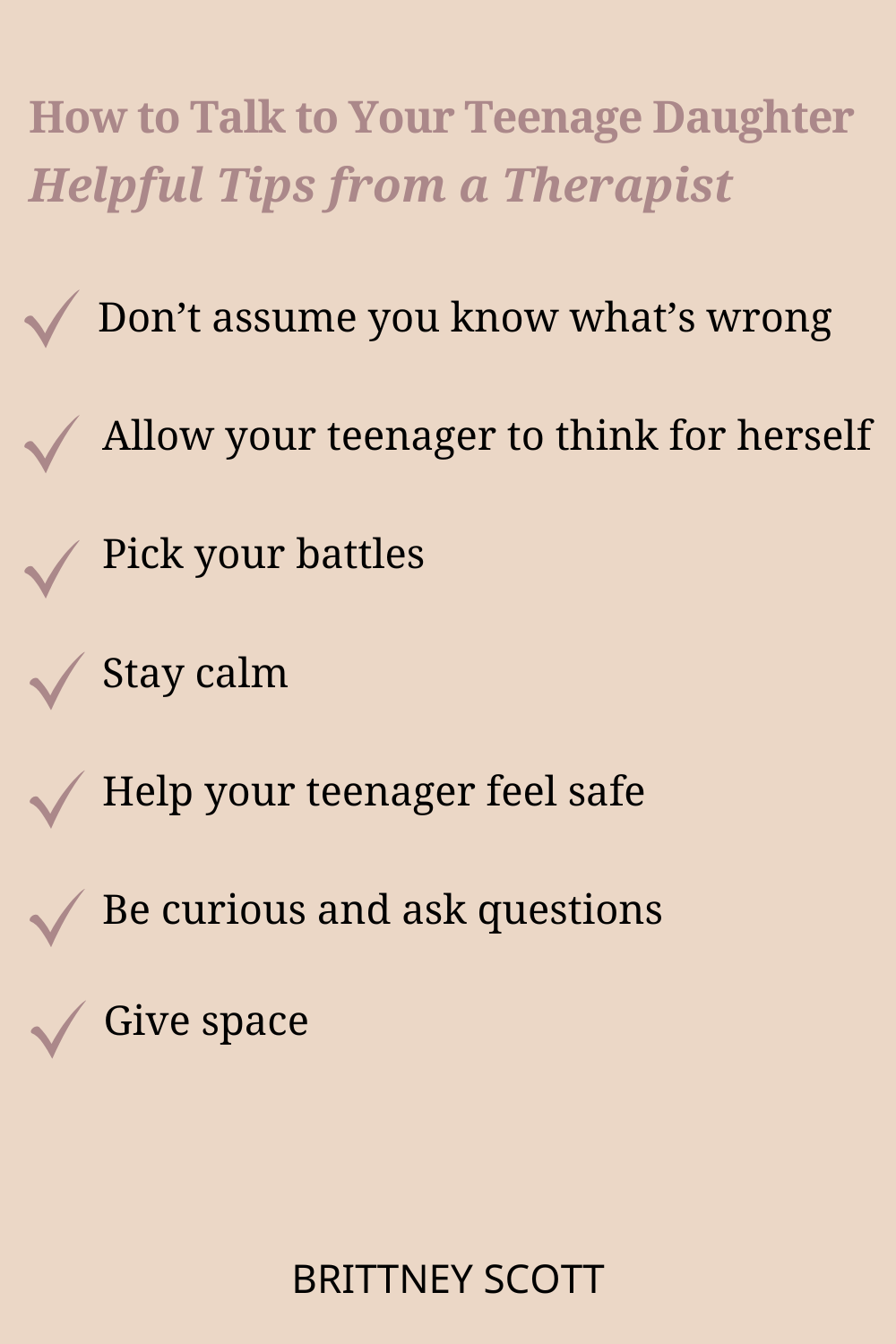
Don’t Assume You Know What’s Wrong
When you leave room for your teenager to explain what’s wrong, you leave space for them to talk more. If you assume you know what’s wrong, you may create a situation in which they shut down and tell you less information.
Show curiosity and don't make assumptions. Instead, let them tell you. You may have an idea, but it’s more beneficial to her to be able to tell you herself.
Allow Your Teenager To Think For Herself
Your teenager will be an adult one day, and being able to think for herself will be extremely important then. Give her the ability to think for herself and express those thoughts while you’re still there to protect her and help fix mistakes.
This stage of your relationship is a good time for her to practice while you show you trust her. She is smart because you raised her that way; let her show you this.
Pick Your Battles
Every battle you face with your teenager doesn’t need to be a battle you fight. Natural consequences are the best teacher, and they are the kind of consequences adults deal with. If you stay up too late and are late to work the next day, you deal with the natural consequence of what happens at work. If your teenager does the same thing, they face the consequence of a lower test grade or missing something fun or important.
Let natural consequences have a place in your parenting by picking your battles. If everything is a fight, she will stop coming to you.

Stay Calm
Your nervous system is running the show more than you probably realize. The calmer you are, the calmer your teen can be. If you’re stressed and feeling heightened, then your teen will match that or shut down.
When you practice remaining calm, you teach them how to do it also and you create a safe environment for them. You’re also slower to react when you can remain calm.
Help Your Teenager Feel Safe
A teen who feels safe with you is a teen who will talk to you.
When talking to your teenager, you can help them feel safe by:
Staying calm instead of overreacting
Listening without trying to fix everything for them
Letting them lead the conversation rather than taking over
Noticing your reactions internally instead of outwardly showing them
Showing up as a trustworthy adult they can bring big things to
Be Curious and Ask Questions
Ask questions and be open to learning. If you give your teen space to teach you and tell you what is happening for them, you give them the safety to keep talking. This can also help you create a healthier relationship.
Questions like, “Do you want my help with this?” or “How do you think you want to handle this?” let them know that you trust them to make good decisions and you are available to help if they want it.
Give Space
Allow your teenager to say I don't want to talk about this right now or lay in their bed alone. Processing emotions or decisions can be a lot and giving them space while remaining open to talking when they’re ready makes you a safe and trusted person. Let your teen relax before talking and telling you at a later time.

How to Talk To Your Teenage Daughter: FAQs
How do I communicate with my daughter?
To communicate with your teenage daughter, focus on how you show up so that she talks to you. Talking to your teenage daughter should first be about how you listen to her. You have to be a person she trusts coming to, so you can be a person she talks to. If you do most of the talking, you aren’t actually listening and getting information.
Remember to ask questions, stay calm, and pick your battles. You should also let your daughter be a part of the conversation on how to fix mistakes or solve problems. This creates trust between you and her.
What are the three critical needs a daughter needs from her mother?
Three critical needs a daughter needs from her mother include support, connection, and trust. If these needs are met, you’ll create a healthy long-term relationship with your daughter.
Your daughter needs you to support her emotionally and support her desires. She is learning and growing, and you’re the first person she looks to know that she is loved.
Your daughter needs connection from you to be confident, trust herself and you, and feel like she belongs. Connection before correction creates safety.
Your daughter also needs to know that she is being trusted to make decisions, make mistakes, and make amends. This gives her the ability to grow into an adult who knows that failing isn't the end of the world and she has a safe person to go to when she needs help.
What are signs my teen is struggling?
Signs your teen is struggling can include isolation, disinterest, and irritability. If your teen suddenly starts isolating themselves when they didn’t before, that is a sign they could be struggling emotionally. If your teen is disinterested in things they once loved, it’s a sign they could be struggling emotionally, with belonging or figuring out who they are. If your teen is irritable and short or snappy, they could be struggling with anxiety.
How to Talk To Your Teenage Daughter: Conclusion
Talking to your teenage daughter isn’t always easy, but it becomes much more manageable when you focus on safety, curiosity, and calm connection. When she feels heard rather than corrected, trusted rather than managed, and supported rather than judged, she’ll keep coming to you. These conversations aren’t about perfection — they’re about showing up in a steady, grounded way that helps her stay close.
If you want support in creating this kind of relationship or reconnecting after distance, I can help. Book a free consultation to discuss how we can work together to help you build a stronger bond with your daughter.