Postpartum Advice for New Moms: Tips for Healing & Motherhood
Becoming a mom is life-changing, and the early days can feel overwhelming. As a mom to a young daughter, I’ve been there. That’s why I created this guide with postpartum advice for new moms who want to heal and feel more confident in motherhood.
Postpartum is a season of recovery, discovery, and major identity shifts. Your body is healing, your routines are shifting, and your heart is expanding in new ways. As a mother-daughter coach, I see these changes often. I also understand them personally.
In this article, you’ll learn simple ways to care for your body, ease discomfort, and support your emotional well-being. I’ll also share how to create small moments of self-care, build confidence as a parent, and find support that feels safe.
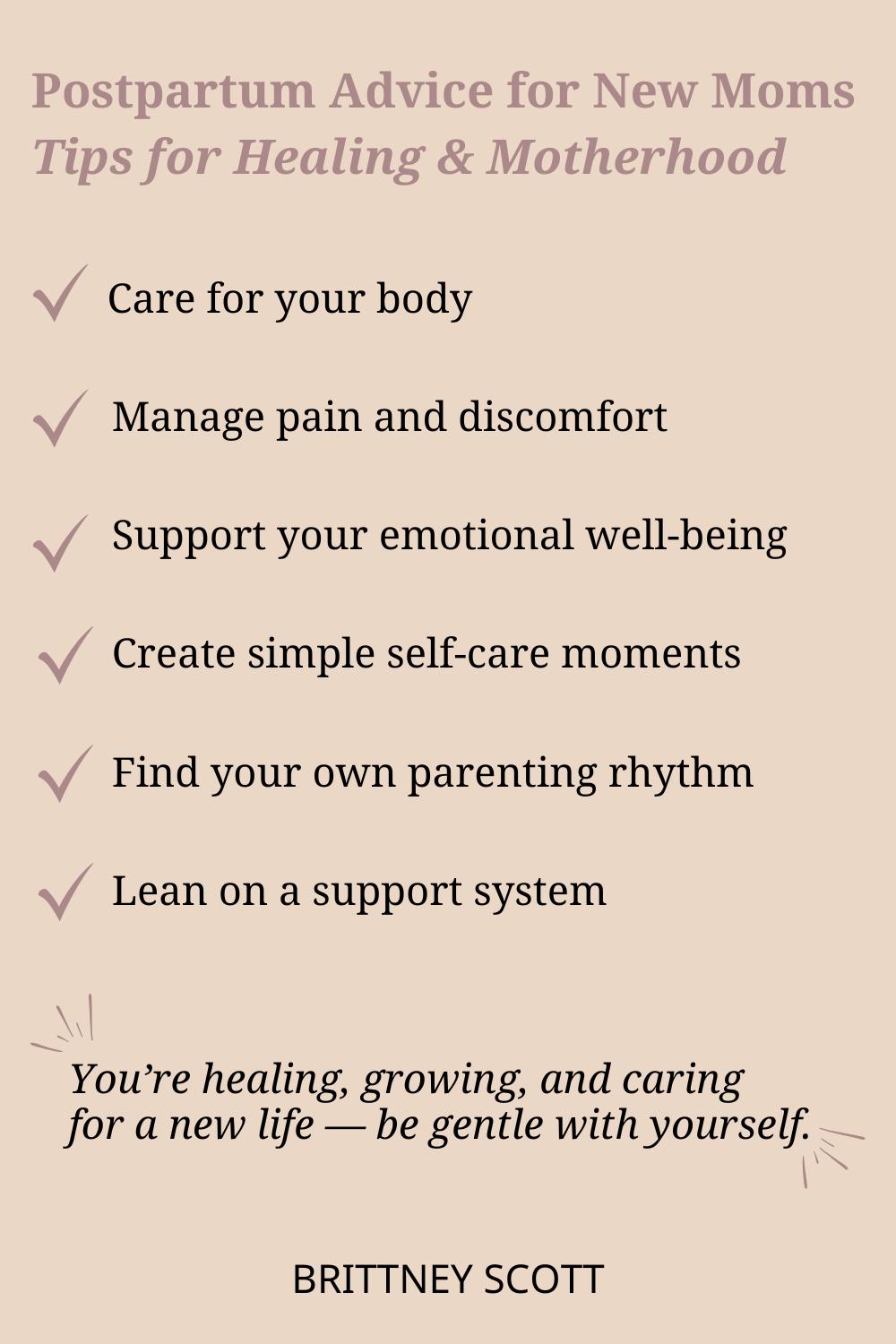
Care for Your Body
Giving birth is an experience unlike any other, and taking care of your body is just as important as ever. This can be easy to overlook or difficult to make time for as a new mom, but even small actions can make a difference. Nourishing your body with nutrients and getting as much restorative sleep as possible are the best places to start.
Focus on nutrients that support healing. Your body needs plenty of protein, healthy fats, fruits, and vegetables to recover well. This matters whether you’re breastfeeding and need extra nutrients or simply healing after birth.
Sleep is another key part of recovery, and if you’re struggling to get enough, you’re not alone. New moms report getting an average of 4.4 hours of sleep in the first week, and about 31% go more than 24 hours without any rest. Since rest supports your hormones, energy, and emotional well-being, try to find small pockets of time to sleep, even if it’s brief.
Manage Pain & Discomfort
While postpartum discomfort is normal, it can be stressful. Although it’s different for every mom, this can last a few days or several weeks. Fortunately, there are ways to manage it.
The American College of Obstetricians and Gynecologists suggests several ways to ease pain and discomfort:
Use a heating pad or cold packs for sore areas
Take over-the-counter pain relief, like ibuprofen, for swelling or cramping
Support your back and arms with pillows while breastfeeding
Drink plenty of fluids to prevent dehydration, ease swelling, and support digestion
Take gentle walks to support healthy bowel movements and relieve stiff joints
Get personalized support from your healthcare provider
Support Your Emotional Well-Being
As a therapist and mother-daughter coach, I’ve offered postpartum advice for many new moms who feel emotionally overwhelmed. About 70 to 80% of new moms experience postpartum depression or the baby blues. However, it’s crucial to address this so you can care for yourself, bond with your baby, and feel more grounded in this new season.
Motherhood may also stir emotions from the past. For example, some women notice their mother wounds surface after having a child. You may feel unworthy or insecure, have difficulty regulating emotions, or worry about repeating old patterns. These moments often point to an inner child who needs nurturing as much as your newborn does.
Regularly checking in with yourself can help you understand what you’re feeling and what you need. Try to name what you’re feeling without judgment and notice when you need rest, reassurance, or additional support.
Create Simple Self-Care Moments
Self-care doesn’t need to be big or time-consuming. Many new moms can’t manage long routines, and that’s okay. Small moments of self-care can add up and help you feel more calm and grounded.
Here are a few easy ideas to care for yourself during postpartum:
Spend a few minutes outside
Take a warm shower to reset
Keep snacks and water within reach
Listen to calming music during feedings
Stretch for a few minutes before bed

Find Your Own Parenting Rhythm
Most new moms worry about getting everything “right.” You might fear repeating generational cycles or feel unsure about what your baby needs. This is a normal part of early parenting.
While there’s a lot of helpful parenting advice for new moms, it’s important to find your own rhythm. Your baby doesn’t need perfection; they need a present parent who’s trying their best. You’ll learn your rhythm day by day as you recognize your baby’s cues, which will help you gain confidence as you go.
Instead of aiming for one “correct” approach, experiment and notice what works for you. Pay attention to the routines that make your days feel smoother, the strategies that calm your baby, and the moments when you feel most connected. And if family pressure feels heavy, setting boundaries with relatives can also help you stay grounded in the approach that feels right for you.
Lean on a Support System
You don’t have to do postpartum alone. Research shows that social support improves well-being in the postnatal season. Support systems can offer comfort, reduce stress, and help you recover with more ease.
Your support can include:
Friends who listen well
A group of fellow moms, like Safety in Sisterhood
Loved ones helping with chores
Professionals who understand postpartum needs
Postpartum Advice for New Moms: FAQs
Get answers to common postpartum care questions to help you understand what’s normal and feel more confident as you recover.

What is the best advice for a new mom?
The best tips for new moms include caring for your body, protecting your emotional well-being, and keeping things simple. Build a safe support system, trust your instincts, and rest when you can. Small steps can make this season feel more manageable.
What is the hardest week of postpartum?
The first six weeks of postpartum are usually the hardest due to physical healing, sleep loss, hormonal changes, and the demands of caring for a newborn. While this early adjustment period is often the most intense, recovery continues over time. Many moms report feeling a greater sense of “normalcy” again between 14 and 19 months postpartum when physical recovery, emotional stability, and family routines start to settle into place.
How can I feel more confident as a new mom?
Practice, rest, and support can help you feel more confident as a new mom. Trust your instincts, learn your baby’s rhythm, and be gentle with yourself.
How do I address mother wounds as a new mom?
If you’re noticing your mother wounds as a new mom, pay attention to what feels challenging for you and what you want to do differently. You might prioritize self-trust, healthy relationships, and support from a professional if needed. I offer individual and mother-daughter coaching if you’re interested in guidance to explore this work more deeply.
Postpartum Advice for New Moms: Conclusion
Early motherhood can feel tender, joyful, overwhelming, and healing all at once. You’re learning, growing, and caring for a new life. With the right support and gentle practices, you can move through postpartum recovery with confidence and peace.
If you want help healing mother wounds or your inner child so you can parent in a way that feels right for you, I’d love to support you. Reach out here to inquire about working together.